periodontal and dental implants logo 01
Medically Reviewed By Periodontal & Implant Surgeons of Houston
16 April 2026
Home » Dental Implants » Full Mouth Restoration in Houston: How Bruxism, Acid Erosion, and Gum Disease Destroy Teeth Over Time

Most patients who need full mouth restoration in Houston did not arrive there overnight. The damage was accumulating quietly – sometimes for a decade or more – driven by three conditions that rarely travel alone: bruxism (chronic teeth grinding), acid erosion, and periodontal disease. Each one is destructive on its own. Together, they create a cycle of oral breakdown that, if left untreated, leaves patients facing tooth loss, jawbone deterioration, and the need for comprehensive reconstruction.

This blog is for people who have been told their teeth are in trouble – or who suspect it – but haven’t yet understood why. If your dentist has mentioned bone loss, worn enamel, failing restorations, or receding gums, you are likely dealing with one or more of the conditions described here. Understanding their causes and how they interact is the first step toward knowing what full mouth restoration actually involves, and why acting sooner always costs less – financially and biologically – than waiting.

full mouth restoration houston
Clinical Note – Dr. Pedro Trejo, Board-Certified Periodontist

“The majority of full mouth reconstruction cases I see at our Houston practice involve overlapping pathology. Patients often come in thinking they have ‘one bad tooth.’ What the clinical workup reveals is systemic oral breakdown driven by grinding, acid exposure, and chronic gum disease working in parallel. The earlier we intervene, the more we can preserve – both teeth and bone.”

1. What Is Full Mouth Restoration – and Who Needs It?

Full mouth restoration refers to a comprehensive treatment plan that addresses damage across the entire dentition – upper arch, lower arch, or both. Unlike a single crown or a filling, restoration at this scale involves multiple procedures coordinated across disciplines: periodontics, implant surgery, prosthodontics, and often cosmetic dentistry.

Patients who need full mouth restoration in Houston typically present with several of the following:

  • Multiple missing teeth, or teeth that cannot be saved
  • Severely worn, cracked, or fractured teeth affecting the bite
  • Significant bone loss around teeth or in the jaw
  • Receding gums exposing root surfaces
  • Chronic tooth sensitivity, pain, or difficulty chewing
  • Old restorations (crowns, bridges, fillings) that are failing
  • Bite collapse – where the vertical dimension of the face has changed

The distinction between full mouth restoration and full mouth reconstruction Houston is largely semantic – both terms describe comprehensive, multi-phase rehabilitation. What matters clinically is identifying the root causes driving the damage, not just restoring the surfaces.

Why Root Cause Diagnosis Matters

Restoring worn-down teeth without addressing the cause of wear is one of the most common reasons reconstruction fails. At Periodontal and Implant Surgeons of Houston, every treatment plan begins with a root cause analysis before any restorative work begins.

2. Bruxism: The Silent Grinder Destroying Your Enamel

What Is Bruxism?

Bruxism is the clinical term for chronic, involuntary teeth grinding or clenching. It affects an estimated 8–10% of the adult population and is significantly underdiagnosed because the majority of grinding episodes occur during sleep, when the patient is unaware. Daytime clenching – a separate but related pattern – often occurs unconsciously during periods of concentration, stress, or anxiety.

What Causes Bruxism?

The etiology of bruxism is multifactorial. Identified contributing factors include:

  • Sleep disorders – particularly obstructive sleep apnea, which has a documented bidirectional relationship with bruxism
  • Psychological stress and anxiety – elevated cortisol levels at night correlate with increased grinding activity
  • Malocclusion – misaligned teeth create an uneven bite that the jaw attempts to self-correct through grinding
  • Neurological factors – dopaminergic dysfunction is implicated in sleep bruxism
  • Medications – SSRIs, stimulants, and some antipsychotics are associated with bruxism as a side effect
  • Caffeine and alcohol consumption – both elevate nighttime arousal and increase grinding frequency

How Bruxism Destroys Teeth Over Time

The average resting bite force for an adult is approximately 150–200 pounds per square inch. During grinding, forces can exceed 500–600 psi – three to four times normal. Applied repeatedly over months and years, this does the following:

  • Wears down enamel – the hardest substance in the human body – exposing the softer dentin underneath
  • Fractures teeth, both visible (cusp fractures) and invisible (cracked tooth syndrome, where cracks propagate vertically through the root)
  • Causes tooth mobility by overloading the periodontal ligament
  • Damages existing restorations – crowns chip, veneers delaminate, fillings fracture
  • Places abnormal stress on the temporomandibular joint (TMJ), causing jaw pain, headaches, and clicking
  • Causes bite collapse when enough vertical tooth structure is lost that the jaw closes too far

Left untreated, severe bruxism leads to teeth worn down to near the gumline – at which point extraction and implant placement may be the only viable option. Porcelain veneers cost and dental crown expenses increase substantially when teeth must be built up before restoration can begin.

Warning Signs of Bruxism

Flattened biting surfaces, notching at the gumline (abfraction), morning jaw soreness, temperature sensitivity, and a history of broken fillings are all clinical indicators. Many patients are unaware they grind until their dentist identifies the wear pattern on examination.

3. Acid Erosion: When Diet and Reflux Dissolve Your Teeth

What Is Dental Acid Erosion?

Acid erosion (erosive tooth wear) is the chemical dissolution of tooth enamel caused by prolonged exposure to acidic substances. Unlike mechanical wear from grinding, erosion is a purely chemical process – and it leaves a distinct clinical signature that experienced clinicians recognise immediately.

Sources of Acid That Erode Teeth

Acid erosion comes from two primary sources: extrinsic (dietary) and intrinsic (systemic).

Extrinsic sources:

  • Carbonated drinks – including sparkling water, which has a pH as low as 3.0
  • Energy and sports drinks – among the most erosive beverages consumed regularly
  • Citrus fruits and juices
  • Vinegar-based foods
  • Frequent sipping of any acidic beverage throughout the day (the exposure duration matters as much as the pH)

Intrinsic sources:

  • Gastroesophageal reflux disease (GERD) – stomach acid repeatedly washing over teeth, particularly during sleep
  • Laryngopharyngeal reflux (LPR, or ‘silent reflux’) – acid reaching the throat and mouth without obvious heartburn symptoms
  • Bulimia nervosa – repeated self-induced vomiting bathes teeth in highly acidic gastric content
  • Chronic vomiting from any cause (pregnancy, chronic illness)

How Acid Erosion Progresses

Erosion is a staged process. Early-stage erosion causes loss of surface lustre and mild sensitivity. As it progresses:

  • Enamel thins and the yellow dentin beneath becomes visible, causing aesthetic changes
  • Teeth appear shorter as the biting edges and cusps dissolve
  • Surfaces develop a smooth, glazed, or scooped appearance
  • Sensitivity becomes severe – hot, cold, sweet, and acidic foods all trigger pain
  • In advanced cases, dentin exposure accelerates the wear process dramatically because dentin erodes up to seven times faster than enamel

Patients presenting for full mouth dental reconstruction often have both acid erosion and bruxism simultaneously. This is clinically significant: acid softens enamel, making it far more susceptible to the mechanical forces of grinding. The interaction between the two conditions accelerates destruction exponentially.

GERD and Your Teeth – A Connection Many Patients Miss

Up to 40% of GERD patients show signs of dental erosion. If you have been diagnosed with reflux, or experience frequent heartburn, your dentist should be informed. At Periodontal and Implant Surgeons of Houston, we screen for erosion patterns during routine examination and can identify whether the source is dietary or systemic.

4. Periodontal Disease: The Infection Destroying Your Jawbone

What Is Periodontal Disease?

Periodontal disease is a chronic bacterial infection affecting the gums and the bone that supports the teeth. It is the leading cause of tooth loss in adults over 35 in the United States, and it is largely silent in its early and middle stages – patients often have no pain until significant damage has already occurred.

The disease progresses in stages recognised by the American Academy of Periodontology:

  • Gingivitis – reversible inflammation of the gum tissue only; no bone involvement
  • Stage I–II Periodontitis – infection extends below the gumline; bone loss begins; pockets form between gum and tooth
  • Stage III Periodontitis – significant bone loss; teeth may begin to loosen; tooth loss risk increases substantially
  • Stage IV Periodontitis – severe bone destruction; multiple tooth loss; bite function compromised; full rehabilitation required

What Causes Periodontal Disease?

The primary cause is the accumulation of bacterial plaque and calculus (tartar) below the gumline. However, the following significantly increase susceptibility and severity:

  • Smoking and tobacco use – reduces blood flow to gums, impairs immune response, and masks symptoms
  • Diabetes – elevated blood glucose impairs healing and increases infection risk; the relationship between diabetes and periodontitis is bidirectional
  • Genetic predisposition – some individuals mount an exaggerated inflammatory response to periodontal bacteria
  • Medications that cause dry mouth (xerostomia) – saliva’s antimicrobial properties are lost
  • Hormonal changes – pregnancy, menopause, and puberty all increase gingival inflammation
  • Systemic conditions including heart disease, rheumatoid arthritis, and osteoporosis

How Periodontal Disease Destroys Teeth and Bone

Unlike decay, which attacks the tooth itself, periodontitis attacks the supporting structures. As the bacterial infection progresses:

  • Alveolar bone – the bone directly supporting tooth roots – is resorbed by inflammatory mediators
  • Periodontal ligament fibres that anchor tooth to bone are destroyed
  • Gums recede, exposing root surfaces to decay and sensitivity
  • Teeth loosen progressively as their foundation is lost
  • The jawbone continues to shrink even after tooth loss – this is why prompt treatment matters for future implant placement

The dental implant cost in Houston increases substantially when bone grafting is required before implant placement. The bone that is lost to untreated periodontitis may need to be regenerated through ridge augmentation procedures before implants can be placed – adding both time and cost to the treatment plan.

The Bone Loss Timeline

Research shows that bone loss of 1–2mm per year is typical in untreated Stage III periodontitis. Over five years of untreated disease, this can render a patient ineligible for standard implant placement without major grafting procedures. Gum disease treatment Houston is not just about saving teeth – it is about preserving the foundation for future restoration.

5. The Destructive Triad: How Bruxism, Acid Erosion, and Gum Disease Work Together

When these three conditions coexist – as they frequently do – the destruction is not simply additive; it is multiplicative. Here is why:

Acid erosion softens enamel → bruxism accelerates mechanical wear on the softened surfaces.

Teeth that would take years to grind through healthy enamel erode within months when that enamel has been chemically weakened.

Bruxism overloads teeth → periodontal disease is worsened by excessive occlusal forces.

Grinding creates what clinicians call “traumatic occlusion” – forces that overwhelm the periodontal ligament’s capacity to dissipate stress, accelerating bone loss in patients who already have periodontitis.

Periodontal disease loosens teeth → loose teeth change the bite → the bite change triggers more grinding.

As teeth lose their bony support and begin to shift or tilt, the bite becomes uneven. The jaw’s natural response to an unstable bite is to grind in search of balance – perpetuating the cycle.

Acid erosion destroys restorations → failed restorations change the bite → the altered bite stresses periodontal tissues.

When crowns, veneers, or fillings placed to manage wear are themselves destroyed by ongoing acid exposure, the restorative work must be repeated – but now on a more compromised foundation.

This is why patients presenting for full mouth restoration Houston are rarely dealing with just one problem. The etiology is always multifactorial, and any treatment plan that addresses the symptom (worn teeth, bone loss, missing teeth) without also addressing the drivers (grinding, acid, infection) will fail – often expensively.

6. When Is Full Mouth Restoration Necessary? Recognising the Point of No Return

Not every patient with bruxism, acid erosion, or gum disease needs full mouth reconstruction in Houston. Many patients can be managed with targeted interventions – a night guard for grinding, dietary modification for erosion, periodontal therapy for gum disease. The threshold for full mouth restoration is reached when:

  • Multiple teeth are structurally compromised beyond repair by a single-tooth approach
  • The bite (occlusion) has been lost or destabilised by tooth loss, severe wear, or bone collapse
  • Periodontal disease has reached Stage III or IV, requiring extraction and implant placement across multiple quadrants
  • Existing restorations have failed to the point that replacement requires a full re-evaluation of the bite
  • The smile makeover cost would be better justified through a comprehensive plan than piecemeal treatment

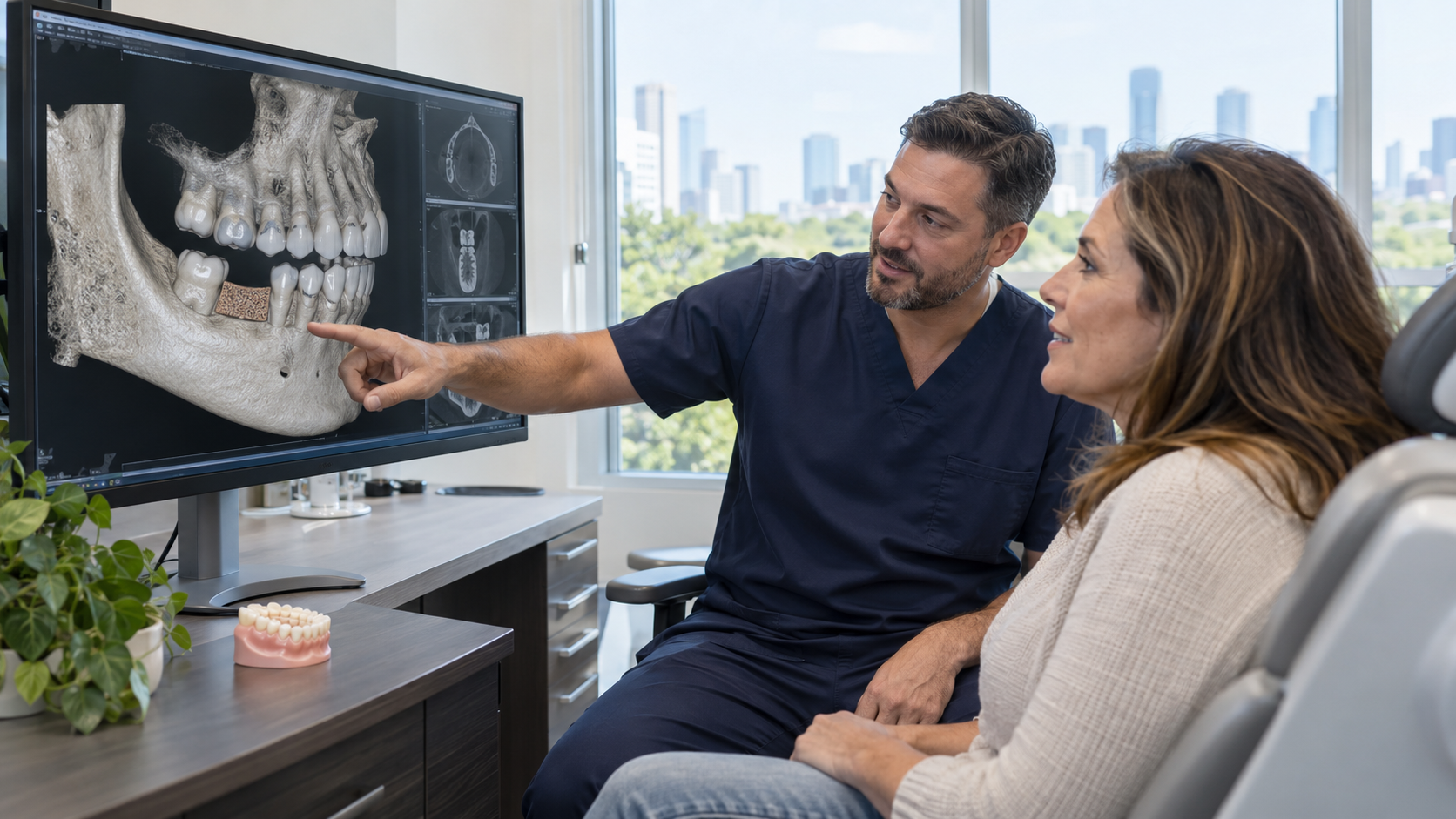
The clinical decision is made through a full diagnostic workup that typically includes full-mouth X-rays (or cone beam CT scanning for implant assessment), periodontal charting of pocket depths and bone levels, occlusal analysis, and study models or digital scans to map the bite.

What Full Mouth Restoration Looks Like at Periodontal and Implant Surgeons of Houston

Dr. Pedro Trejo, who holds dual board certification in periodontics and prosthodontics, leads comprehensive reconstruction cases at the practice. This means surgical management (extractions, bone grafting, implant placement) and prosthetic rehabilitation (crowns, implant-supported restorations, full-arch prosthetics) are coordinated under one roof – reducing treatment time, referral errors, and patient stress.

7. What Does Full Mouth Restoration Treatment Involve?

While every case is unique, a comprehensive restoration plan at Periodontal and Implant Surgeons of Houston typically progresses through the following phases:

Phase 1: Diagnosis and Treatment Planning

Comprehensive clinical exam, periodontal charting, radiographic assessment (X-rays or CBCT), bite analysis, and digital smile design. Root causes – bruxism, GERD, systemic disease – are identified and referred for co-management where appropriate.

Phase 2: Periodontal Stabilisation

No restorative work begins until the periodontal environment is healthy. This phase addresses gum disease treatment Houston patients require before implants or crowns can succeed long-term. Treatment may include scaling and root planing, surgical periodontal therapy, bone grafting, and gum grafting.

Phase 3: Tooth Removal and Site Preparation

Teeth that cannot be saved are extracted. Socket grafting is performed at the time of extraction to preserve bone volume for implants. Ridge augmentation may be needed in areas of existing bone loss.

Phase 4: Implant Placement

Dental implants are placed where teeth have been lost. For patients requiring full-arch restoration, All-on-4 implants provide a fixed, same-day solution. Dental implant cost varies by the number of implants, whether bone grafting was required, and the type of restoration chosen.

Phase 5: Prosthetic Restoration

Crowns, bridges, implant-supported restorations, porcelain veneers, or full-arch prosthetics are fabricated. Where relevant, the bite is fully reconstructed to the correct vertical dimension. The final result addresses both function and aesthetics – this is where smile makeover cost elements are incorporated for patients with cosmetic goals alongside their clinical needs.

Phase 6: Occlusal Protection and Maintenance

Custom night guards are fabricated for bruxism patients. Ongoing maintenance appointments monitor periodontal health, restoration integrity, and bone levels. The maintenance phase is not optional – it is what determines whether a comprehensive restoration lasts a lifetime or a few years.

8. The Cost of Waiting – Why Early Intervention Always Costs Less

A question we hear frequently at Periodontal and Implant Surgeons of Houston is: “Can I wait?” The honest clinical answer is almost always the same: waiting makes both the biology and the bill worse.

  • A tooth that needs a crown today may need extraction and a dental implant next year – at three to five times the cost
  • Bone lost to untreated periodontitis may require a bone graft before implant placement is even possible
  • Grinding without a night guard can fracture teeth to below the gumline, making extraction unavoidable
  • Stage II periodontitis managed now is non-surgical. Stage IV periodontitis requires surgical intervention, multiple extractions, and a reconstruction plan

The dental implant cost for a staged, planned case is always lower than the cost of managing a dental emergency. Full mouth dental reconstruction undertaken as a planned procedure – with phased payment options – is financially and clinically more manageable than reacting to progressive failure.

Conclusion: Get to the Root Cause Before It Gets Worse

Bruxism, acid erosion, and periodontal disease are three of the most common oral health conditions affecting Houston adults – and they are three of the most underestimated. They rarely announce themselves with pain until significant damage has already occurred. By the time most patients seek treatment, the destruction is well advanced.

Full mouth restoration in Houston is not a cosmetic choice. For patients where these conditions have converged, it is a medical necessity – one that, when planned correctly and executed by a dual-specialist team, restores chewing function, eliminates chronic pain, prevents further bone loss, and provides results that last decades.

If you have noticed any of the signs described in this article – worn teeth, receding gums, loose teeth, chronic sensitivity, or a history of breaking fillings – the right first step is a comprehensive evaluation, not a wait-and-see approach.

Schedule a Consultation at Periodontal and Implant Surgeons of Houston

Dr. Pedro Trejo and the specialist team at Periodontal and Implant Surgeons of Houston offer comprehensive diagnostic consultations for patients considering full mouth restoration. Located at 2600 S. Gessner Rd, Suite 304, Houston TX. Call +1 (281) 389-2057 or visit dentalimplantsathouston.com to request your appointment.


Frequently Asked Questions

  • How long does full mouth restoration in Houston take?

    Treatment duration ranges from six months for moderate cases to 18–24 months for complex cases involving multiple implants, bone grafting, and full-arch reconstruction. Periodontal stabilisation must be completed before restorative phases begin, which accounts for much of the timeline in advanced periodontitis cases.

  • Is full mouth restoration painful?

    Modern anaesthesia and sedation options mean that most patients report minimal discomfort during procedures. Post-operative soreness after surgical phases (implant placement, bone grafting) is managed with prescribed medication. Many patients report that the restoration process is far less uncomfortable than the chronic tooth pain they lived with before treatment.

  • Does insurance cover full mouth reconstruction in Houston?

    Coverage varies significantly. Periodontal treatment is typically partially covered. Implants are often not covered by standard dental insurance, though medical insurance may cover bone grafting in certain circumstances. The team at Periodontal and Implant Surgeons of Houston will review your insurance benefits and available financing options – including CareCredit – during your consultation.

  • Can porcelain veneers be part of a full mouth restoration?

    Yes. Porcelain veneer cost is a component of the restoration plan for patients who have anterior teeth that are structurally sound but cosmetically compromised – by acid erosion, wear, or staining. Veneers address aesthetic concerns while more functional issues (implants, crowns, periodontal therapy) address the structural foundation.

  • How do I know if I need full mouth restoration or just a few crowns?

    The determining factor is whether the bite – the occlusion – has been affected. If individual teeth are damaged but the bite relationship is intact, targeted crowns or implants may suffice. When the bite has collapsed, multiple quadrants are affected, or bone loss is extensive, a full-arch assessment is warranted. A diagnostic consultation with Dr. Pedro Trejo will clarify which category you fall into.